Disclaimer: Not financial, tax, or accounting advice, and not a recommendation about your finances or your clients’. AI tools can fabricate figures, so verify every output against source records before it informs a decision.
Table of Contents
Some links in this guide are affiliate links. We may earn a small commission if you sign up, at no extra cost to you. Our recommendations are based on independent review; affiliate relationships do not influence which tools we cover or how we rank them.
How AI Is Transforming Accounting in 2026
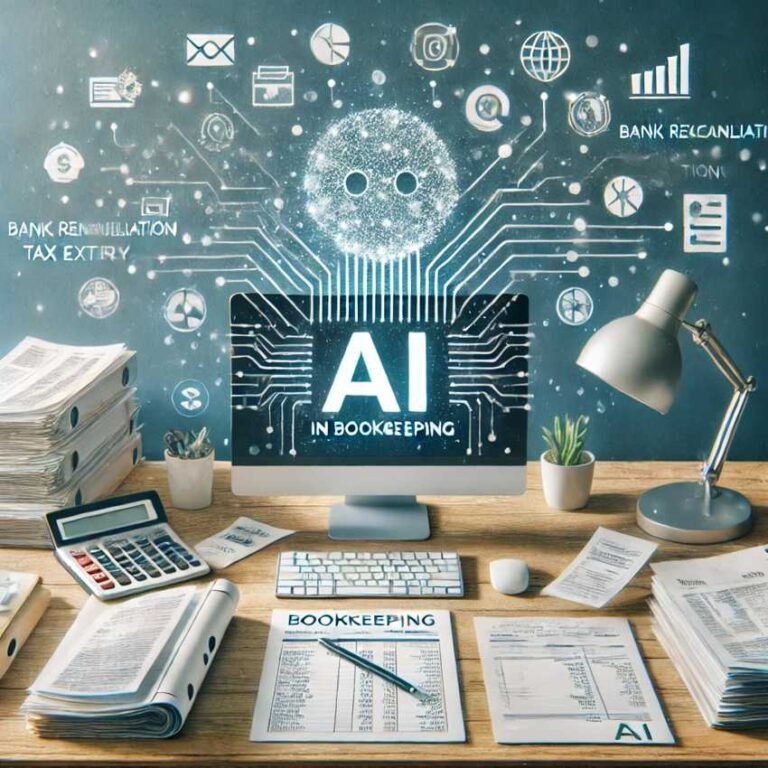
AI is no longer just a buzzword in the accounting world — it’s now a critical tool helping professionals save time, reduce errors, and deliver more value to clients. Whether you’re a solo CPA, part of a growing firm, or managing finance at a startup, the right AI tools can transform your workflow.
In this guide, we’ll explore the best AI tools for accountants in 2026, how to choose the right one, and how to integrate them into your practice.
At a Glance: Why Accountants Are Embracing AI
Accountants are increasingly turning to artificial intelligence to optimize their workflows and stay competitive. AI automates routine tasks, reduces human error, and allows professionals to focus more on strategic and analytical work.
In Intuit’s 2026 Accountant Technology Survey of 725 US accounting professionals, 88% had used AI for at least one client service in the previous 12 months, but only 30% describe it as fully embedded in how they work; 54% reach for it situationally (Intuit, May 2026). Adoption is close to universal. Depth is where firms still differ.
Quick Comparison: Top AI Tools for Accountants
Short on time? Here’s the shortlist at a glance — the standout tool for each job. Full reviews and more options follow below.
| Tool | Best for | Pricing (from) | Key AI feature |
|---|---|---|---|
| Dext | Bookkeeping & receipt capture | Paid (from ~$25/mo) | AI OCR extraction + auto-categorization |
| Vic.ai | Accounts-payable automation | Custom | Autonomous invoice processing |
| Bill | AP/AR & bill pay | From ~$45/mo | AI invoice capture + approvals |
| Blue Dot | Tax & VAT compliance | Custom | AI tax/expense detection |
| Databox | Client dashboards & reporting | Free / from $59/mo | AI Analyst; 130+ connectors |
| SaneBox | Tax-season inbox triage | From $7/mo | AI email prioritization |
| Lindy | AI assistant (email, meetings) | Free trial + paid | Agentic email + meeting notes |
| Reclaim | Scheduling & focus time | Free / paid | AI calendar auto-scheduling |
| QuillBot | Client comms & reports | Free / from $10/mo | Paraphrase, grammar, summarize |
| Synder | E-commerce sales & payment sync | From ~$52/mo | Auto-sync, reconciliation & revenue recognition |
Ready to try one? Start with our partner picks:
Some links are affiliate links; see disclosure.
From Ledgers to Learning Models: How AI Powers Accounting Today
AI technology now plays a major role in various aspects of accounting. It can automate data entry, classify transactions, detect anomalies, and provide insights through real-time dashboards. Tools powered by machine learning improve over time, learning from past inputs to make smarter recommendations.
Some of the most common uses include invoice and receipt automation, bank transaction categorization, audit trail creation, and predictive financial forecasting. AI can even summarize client meetings and assist in tax compliance across regions. Rather than replacing accountants, AI empowers them to be more efficient and valuable. For a wider view of how finance teams are using the same tech, see our roundup of the best AI tools for finance.
Choosing Smarter Software: What Makes a Great AI Tool for Accountants?
Not all AI tools are created equal. When evaluating software for your firm or practice, consider the following factors:
- Automation capabilities: Does the tool significantly reduce manual work?
- Integration: Does it integrate with tools you already use (e.g., QuickBooks, Xero, Excel)?
- Security & compliance: Look for tools that follow SOC 2, GDPR, and industry best practices.
- User experience: An intuitive interface means easier adoption by your team.
- Support & training: Are onboarding resources, tutorials, and customer support readily available?
- User reviews: Ratings from platforms like G2 and Capterra provide valuable third-party insights.
Choosing a tool that aligns with your firm’s needs will improve ROI and user adoption.
Emerging Trends: What’s Next for AI in Accounting?
In 2026, AI tools are becoming more embedded into everyday workflows. Here are three key trends shaping the profession:
- Real-time data summarization: AI can instantly condense large datasets, offering accountants faster access to critical insights.
- Predictive analytics: More tools offer cash flow predictions, tax liability forecasting, and budget planning suggestions.
- Embedded AI in tools you already use: Rather than switching apps, AI is now integrated into platforms like spreadsheets, email, and CRM systems.
These trends make AI not just a tool, but a silent partner in your workflow.
Getting Started with AI: A Practical Roadmap for Accountants
Implementing AI can feel overwhelming, but it doesn’t have to be. Here’s a step-by-step guide:
- Audit your workflow: Identify repetitive and time-consuming tasks.
- Pick one starting point: Start with a narrow use case like invoice scanning or meeting summaries.
- Select a tool: Use the list below to find a tool that matches your goal.
- Train your team: Introduce the tool gradually and provide training.
- Measure impact: Track KPIs like hours saved, error reduction, or faster closes.
By starting small and iterating, you build confidence while laying the foundation for broader AI adoption.
10 Standout AI Tools for Accountants in 2026
Below is a curated list of top-performing AI tools, including use cases, benefits, drawbacks, and user ratings.
1. ClickUp Brain
ClickUp Brain offers AI-powered task automation, note summaries, and content generation within the ClickUp workspace. It’s ideal for firms already using ClickUp or those wanting to combine task management with smart suggestions.
- Limitations: Requires full ClickUp adoption
- G2 Rating: 4.7/5
2. Vic.ai
Vic.ai automates accounts payable by using machine learning to process invoices and reduce manual data entry. It’s built for mid-size to large firms seeking scale.
- Limitations: Enterprise pricing model
- G2 Rating: 4.8/5
3. Bill
Bill (formerly Bill.com) provides automated payables and receivables, cash flow visibility, and approval workflows tailored to small and medium businesses.
- Limitations: Most useful for U.S.-based firms
- G2 Rating: 4.3/5
4. Indy
Designed for freelancers and small firms, Indy offers simple invoicing, time tracking, and contracts with AI support for document creation.
- Limitations: Limited advanced AI functionality
- G2 Rating: 4.5/5
5. Zeni
Zeni combines AI and human bookkeepers to provide startups with real-time financial insights. It handles everything from categorization to reporting.
- Limitations: May not scale well for larger firms
- G2 Rating: 4.4/5
6. Docyt
Docyt offers real-time financial reporting, categorization, and GL entry automation. It helps reduce closing time and provides greater visibility.
- Limitations: Requires syncing with financial institutions
- G2 Rating: 4.6/5
7. Gridlex
Gridlex merges accounting and CRM in one platform, using AI to provide unified insights. It’s suitable for teams needing both functions in a single tool.
- Limitations: Less well-known, smaller ecosystem
- G2 Rating: 4.2/5
8. Booke.ai
Booke.ai streamlines client collaboration, offering AI-powered categorization, notes, and messaging to reduce back-and-forth.
- Limitations: Still evolving, limited integrations
- G2 Rating: 4.3/5
9. Blue Dot
Blue Dot focuses on tax compliance and spend classification, especially for multi-national companies. It uses AI to ensure region-specific rules are applied.
- Limitations: Best suited for larger/global teams
- G2 Rating: 4.6/5
10. Truewind
Truewind is built for VC-backed startups and automates bookkeeping, FP&A, and financial modeling.
- Limitations: Niche focus on early-stage tech companies
- G2 Rating: 4.5/5
More Tools by Category
Here’s a breakdown of additional AI tools, categorized by function:
Accounting & Tax
- Spark: GenAI for accountants without data retention
- SmartVault: Client document workflows
- 1040SCAN: Automated tax workpaper prep
Client Management
- OtterPilot™: AI meeting transcription and summaries
- Silverfin Assistant: Anomaly detection in client files
Bookkeeping
- Botkeeper, Dext Prepare, Nanonets: AI for data capture and reconciliation
- Synder: Auto-syncs sales and payouts from Shopify, Amazon, Stripe, and PayPal into QuickBooks or Xero, with automatic reconciliation and revenue recognition — ideal for accountants with e-commerce clients.
Marketing & Writing
- Jasper, StoryChief, Claude, Perplexity, Grammarly AI: Content generation, SEO writing, research
- QuillBot – paraphrasing, grammar, and summaries for client reports, emails, and engagement letters.
Email Productivity
- Lindy: AI executive assistant that triages email, drafts replies, schedules meetings, and runs follow-ups — built for high-volume inboxes during tax season.
- SaneBox: AI email triage that filters unimportant client and vendor emails into folders, surfaces priority threads, and sends follow-up reminders. Works with Gmail, Outlook, and any IMAP inbox.
- Reclaim.ai: AI calendar that auto-schedules deep-work blocks, client meetings, and tasks around your deadlines and existing commitments — protects focus time during busy season.
Forecasting & CRM
- Gong.io, Moby, ChatSpot, Einstein Copilot: Revenue insights and lead summaries
- Brevo: a right-sized CRM + email platform for smaller firms — client newsletters, tax-deadline reminders, and lead nurture without the enterprise overhead of Salesforce or HubSpot.
- Close: AI sales CRM for firms actively managing a pipeline of prospects — auto-logged calls and emails, follow-up reminders, and built-in outreach.
Keeping Client Financial Data Secure
Accountants handle some of the most sensitive data there is — Social Security numbers, bank details, and full financial records — and the IRS now requires paid tax preparers to maintain a written Information Security Plan (WISP). Beyond the accounting apps themselves, that means protecting the devices and inboxes where client data actually lives. Bitdefender covers the endpoint side: real-time malware and ransomware protection, a built-in VPN for working securely on the go, and identity and dark-web monitoring so a breach at a third party doesn’t blindside you. Pair it with secure document handling (SmartVault, above) and you’ve covered the practical core of a WISP.
Will AI Replace Accountants?
Despite what headlines may claim, AI is not a replacement for accountants. It lacks emotional intelligence, ethical reasoning, and contextual understanding. Accountants provide strategic insight and human connection — AI simply enhances that capability. For platforms built around both sides of the ledger, our guide to the best AI tools for finance and accounting is worth a read.
Matching Tools to Your Firm’s Needs
Not all tools fit all firms. Here’s how to choose:
- Solo practitioners: Lightweight, affordable tools like Indy or Booke.ai
- Small firms: Tools with integrations and automation like ClickUp Brain or Docyt
- Enterprises: Scalable and compliant solutions like Vic.ai and Blue Dot
Always start with a demo and evaluate ROI before scaling.
Final Thoughts: AI is the Future of Accounting
AI is no longer optional in the modern accounting toolkit. It’s a powerful ally in saving time, reducing risk, and increasing value for clients. Start small — pick one use case, test a tool, and build from there. Accountants supporting founders can also point clients toward our picks for the best AI tools for new businesses.
And if you’re looking for a versatile platform that combines productivity with AI intelligence, ClickUp Brain offers a powerful starting point.
Key Takeaways
- AI empowers, not replaces, accountants
- Choosing the right tool depends on firm size, workflow, and goals
- Adoption should be iterative: pilot, measure, expand
- The future is human accountants using smart, AI-powered tools

Richard Johnson
Richard Johnson is an AI specialist at one of the world's largest technology companies, where he has spent the past three years helping organizations adopt AI. CognitiveFuture extends that work publicly: gathering the available evidence on each tool, from vendor documentation to independent reviews and user feedback, and cutting a crowded market down to the right choice for the job in front of you.