Last updated: August 2026
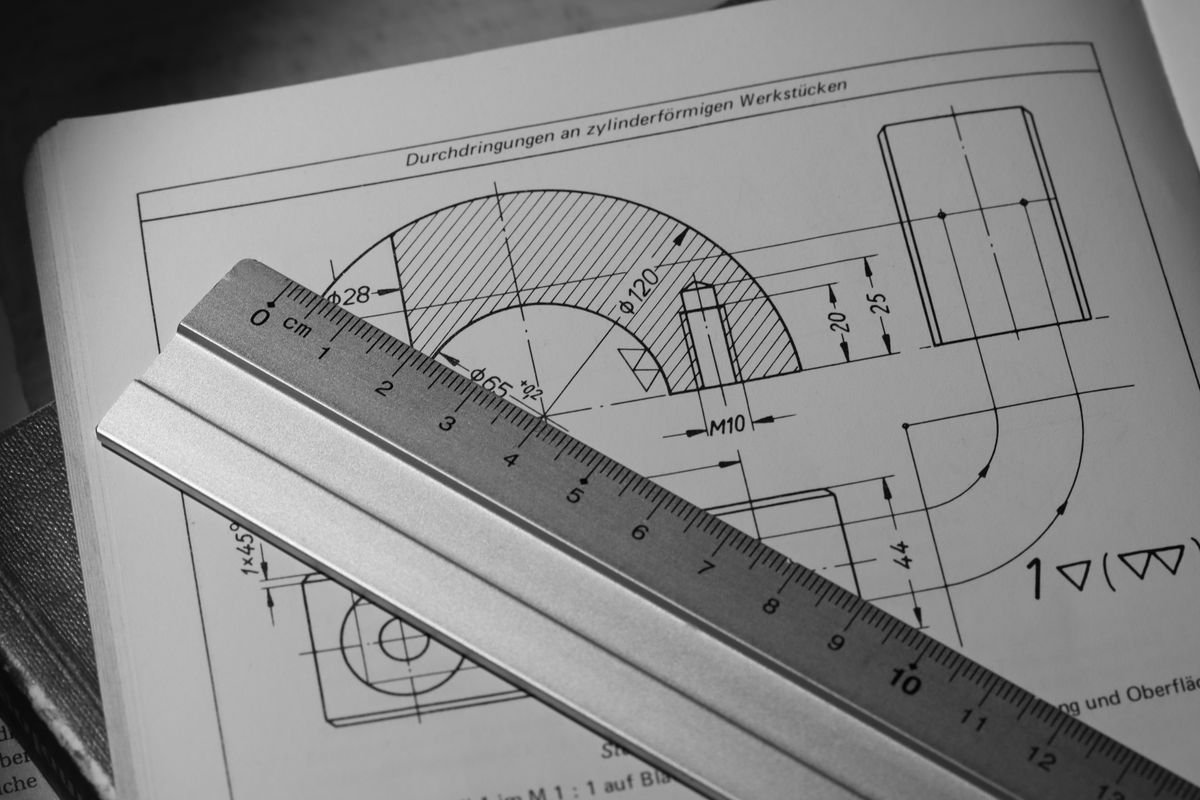
Can AI read technical drawings is really two questions. Can it pull the text and numbers off a drawing, and can it understand what the drawing means as an engineering document? The honest answer splits down that line. Today’s vision models are good at reading the words and figures on a drawing and reasonable at spotting that a feature is present, but they are unreliable at interpreting the engineering semantics that matter, such as geometric tolerances, projection conventions, and symbol counts. This guide sets calibrated expectations using recent benchmarks, explains why AI hallucinates on drawings, and shows how to use it safely. It pairs with our guide to understanding an old engineering drawing and, for the file-format side, our guide on how to what happens when you upload a CAD file. For the wider toolkit, see the hub on the Three companion guides go document by document: wiring diagrams, GD&T drawings, and component datasheets. For the wider toolkit, see the hub on the best AI tools for mechanical engineering. Beyond reading, we cover a tolerance stack-up workflow, prompts for mechanical engineers and the AI features inside AutoCAD.
The short answer
Partly. General vision models such as GPT-4o, Claude, and Gemini reliably read text, notes, and numbers off a drawing, and they can often tell that a part or feature exists. They are unreliable at the engineering meaning, including geometric dimensioning and tolerancing, projection conventions, tolerances, and counting symbols. In published tests, the accurate extraction of dimensions and symbols is done by specialized detect-then-parse pipelines with fine-tuned models, not by raw chatbots. Treat any AI reading of a drawing as a draft a qualified engineer must check.
What AI reads reliably, and what it does not
Recent benchmarks from several independent research groups point the same way: capability drops sharply as you move from reading text to interpreting engineering semantics.
| Task | Reliability | What the evidence shows |
|---|---|---|
| Title-block text, notes, OCR | Most reliable | Text and OCR question answering reached up to about 0.95 accuracy in one 2026 benchmark |
| Extracting dimension values | Only with the right pipeline | A detect-then-parse pipeline reached about 93.5% F1 across 1,367 drawings; raw zero-shot chatbots do far worse |
| Interpreting GD&T symbols | Error-prone | Zero-shot GPT-4o and Claude often produced hallucinated or inaccurate output on domain symbols; a fine-tuned small model beat the best closed model by a wide margin |
| Counting symbols or features | Largely unsolved | Symbol-centric tasks and reliable counting sat around 0.40 to 0.55 accuracy and were described as unsolved |
| Describing a part faithfully | Finds it, describes it wrong | Models found the parts (recall 0.61 to 0.87) but their descriptions scored far lower, a systematic identification-versus-description gap |
The pattern is consistent. A 2024 GD&T study found that zero-shot GPT-4o and Claude 3.5 Sonnet frequently produced hallucinated or inaccurate output on domain-specific symbols, and that a fine-tuned 0.23-billion-parameter model beat the best closed model by 52.4% in F1 while cutting hallucination by 43.15% (Khan et al., 2024). Accurate dimension extraction, in a follow-up, came from a hybrid detect-then-parse pipeline reaching about 93.5% F1, not from a chatbot alone (Khan et al., 2025). Meanwhile the MIT and Autodesk DesignQA benchmark found leading models struggle to analyze engineering drawings (Doris et al., 2024), and a 2026 architectural and engineering benchmark put symbol understanding and counting at 0.40 to 0.55 and concluded the models do not read drawings reliably (AECV-Bench, 2026).
Why AI hallucinates on drawings
The failure modes are specific and repeatable, which is why they matter for real work.
- Hallucinated dimensions and symbols. When a model cannot parse a dense feature-control frame or a crowded layout, it fills the gap with a plausible but wrong value, the same failure that fine-tuning was shown to reduce.
- Right object, wrong description. One 2026 benchmark found models could tell a part was present yet fabricate its specification, a large gap between finding and describing (Enginuity, 2026).
- Missing drafting knowledge. General models lack priors for projection conventions and tolerances, so they misread views and geometry that any drafter takes for granted (MechVQA, 2026).
The root cause is that a drawing encodes meaning through dense spatial layout, domain symbols, and cross-references, unlike the natural images these models were mostly trained on. It is the same reason AI can get units wrong: the notation is precise and unforgiving, and a confident guess is still a guess.
How to use AI on drawings safely
Used within its strengths, AI genuinely saves time. The trick is to match the task to what it does well.
- Lean on it for text. Reading title blocks, notes, and revision text, or summarizing what a drawing says in plain language, is where it is strongest.
- Never trust a read-off dimension or GD&T call. Recompute or re-measure anything numerical, and confirm every tolerance and symbol against the drawing itself, using the discipline in checking an AI answer before you use it.
- Use purpose-built extraction for data. If you need to pull dimensions or a bill of materials at scale, the reliable results come from detect-then-parse tools, not a general chatbot.
- Keep an engineer in the loop. The benchmarks agree these tasks need human review; treat AI as an assistant, consistent with the broader where AI falls short in engineering.
Frequently asked questions
Can ChatGPT read an engineering drawing and pull out the dimensions?
It can read printed text and numbers off a drawing, but reading a dimension correctly is not guaranteed, and it will sometimes invent a plausible wrong value. For reliable dimension extraction, published results come from specialized detect-then-parse pipelines, not a general chatbot. Always verify any dimension against the drawing.
Can AI interpret GD&T symbols and tolerances correctly?
Not reliably. In testing, zero-shot GPT-4o and Claude frequently produced hallucinated or inaccurate output on geometric dimensioning and tolerancing, and fine-tuned specialized models were needed to get accurate, low-hallucination results. Do not trust a general model’s reading of a feature-control frame.
Which AI model is best at reading technical drawings?
No general model is dependable for the semantics. Across benchmarks, leading models including GPT-4o, Claude, and Gemini all struggled with drawing interpretation, and the accurate results came from task-specific pipelines rather than one standout chatbot. Choose the tool by the task, and verify.
Why does AI get dimensions wrong when reading blueprints?
Drawings pack meaning into dense layouts, domain symbols, and cross-references that differ from the natural images the models learned from, and they lack drafting priors such as projection and tolerance conventions. When the model cannot parse a region, it produces a confident guess rather than admitting uncertainty.
Do I still need an engineer to check AI’s reading of a drawing?
Yes. The research consistently calls for human-in-the-loop review, because the models find features more reliably than they describe them and can fabricate specifications. Use AI to speed the first pass, and have a qualified engineer confirm anything that will be built or bought.
Sources
- Zero-shot vs fine-tuned models on GD&T extraction: Khan et al., 2024 (arXiv:2411.03707)
- Detect-then-parse dimension extraction, ~93.5% F1: Khan et al., 2025 (arXiv:2506.17374)
- DesignQA, models struggle to analyze drawings: Doris et al., 2024 (arXiv:2404.07917)
- AECV-Bench, symbol understanding 0.40 to 0.55, unsolved: arXiv:2601.04819
- Enginuity, identification vs description gap: arXiv:2606.03410
- MechVQA, missing drafting knowledge: arXiv:2605.30794
About the author: this guide was written and edited by the CognitiveFuture editorial team, which researches how AI tools fit real professional workflows. We cite primary sources for the claims we make and update our recommendations as the research changes. We do not test products ourselves; our assessments synthesize peer-reviewed research and primary reporting. See how we evaluate AI engineering tools. Model capabilities move quickly, so treat benchmark figures as a snapshot of when they were measured.

Richard Johnson
Richard Johnson is an AI specialist at one of the world's largest technology companies, where he has spent the past three years helping organizations adopt AI. CognitiveFuture extends that work publicly: gathering the available evidence on each tool, from vendor documentation to independent reviews and user feedback, combined with hands-on testing where we have done it and said so, and cutting a crowded market down to the right choice for the job in front of you.